You arrive in Sydney at 9:30 a.m., drop your bag, and immediately face the classic coastal-city trap: a harbour walk, a museum, a market, a ferry ride and dinner reservations all competing for the same eight hours. By 4 p.m., you have seen the waterfront but barely experienced it.
May is a good month for a slower plan across Oceania. Southern Hemisphere autumn usually brings cooler walking temperatures, fewer peak-season crowds and enough daylight for one substantial coastal route per day. This guide treats walking as the main event, not the gap between scheduled attractions. The figures below are planning ranges, not guarantees. Check the local forecast, transport alerts and daylight hours before setting out. This is not financial advice; it is a travel plan built around keeping your time and spending under control.
Which Oceania harbour walk fits a relaxed May day?
A five-city comparison
| City | Suggested route | Approximate distance | Walking time | Typical May planning range |
|---|---|---|---|---|
| Sydney | Circular Quay to Barangaroo, Walsh Bay and back through The Rocks | 4 to 6 km | 2.5 to 4 hours with stops | 14 to 21°C; allow for wind and showers |
| Auckland | Viaduct Harbour to Mission Bay along Tamaki Drive | 7 to 8 km one way | 2 to 3 hours moving | 12 to 18°C; rain can arrive quickly |
| Wellington | Wharf area to Oriental Bay and back | 4.5 to 6 km | 2 to 3 hours with cafés | 10 to 16°C; strong wind is the main issue |
| Hobart | Salamanca, Battery Point, Constitution Dock and waterfront return | 3 to 5 km | 2 to 3 hours | 8 to 16°C; crisp mornings and cool shade |
| Fremantle | Fishing Boat Harbour, Bathers Beach and the West End | 4 to 6 km | 2.5 to 4 hours | 13 to 23°C; sunnier but exposed |
The clear winner for a first visit
Sydney is the best first choice for a low-stress harbour day. The route has several exit points, frequent cafés, public toilets and easy connections back to the city. If the weather turns, you can shorten the walk at Barangaroo or The Rocks without losing the main views. Auckland offers a longer and more open waterfront, but the full Mission Bay route becomes a commitment once you leave the central harbour. Wellington is compact and rewarding, yet its wind can make a mild forecast feel much colder.
How to read the distances
These are not race distances. A 5 km harbour route can occupy half a day after photographs, coffee, ferry watching, galleries and unplanned detours. Budget 60 to 90 minutes of actual movement for every 3 to 4 km if you want the day to feel spacious. A walking app may label a route as flat while hiding stairs, exposed headlands or a steep return street. The safer assumption is that waterfront cities have one surprise climb somewhere.
Bottom Line: Pick Sydney for the easiest flexible day, Hobart for a compact historic waterfront, Wellington for cafés and urban views, Auckland for a longer endurance walk, and Fremantle for warmer open-air walking. Do not book a second major attraction before you know how the first route feels.
Why one harbour walk is enough for a May travel day
The first-principles case for leaving space
A harbour walk solves a basic travel problem: it lets you understand a city through movement rather than through a sequence of indoor stops. Water reveals the working port, expensive apartments, ferry routes, old warehouses, public parks and changing weather in one continuous view. That information arrives gradually. You notice how long locals sit outside, where cyclists pass, which shore faces the afternoon sun and where the city becomes residential.
Overscheduling removes the useful part. When every hour has a reservation attached, you stop responding to the place in front of you. You walk past a public market because the museum slot starts in twenty minutes. You take a taxi across town to save time, then spend the saved minutes looking for the correct entrance. The day becomes a transport puzzle.
What May weather changes
May sits in autumn across Australia and New Zealand. Sydney and Fremantle can still feel warm in the sun, while Hobart and Wellington may feel cold once the wind reaches the waterfront. Rain does not need to cancel the plan, but it should change the route. Choose a loop near covered cafés, museums or transport instead of committing to a long exposed shoreline.
Start later than a summer itinerary if the morning is cold, but do not push the walk too far into the afternoon. Waterfront light drops quickly behind buildings and hills. A 10 a.m. start usually leaves room for lunch and a short indoor stop without forcing the final kilometre in darkness.
The useful planning ratio
Use a simple 60:25:15 split. Give roughly 60 percent of the day to the main walk and unplanned pauses, 25 percent to one secondary activity, and 15 percent to transport, weather delays and finding food. A 6-hour outing might therefore contain three and a half hours around the harbour, ninety minutes at one museum or market, and about an hour of slack.
This ratio also protects the budget. A walk costs nothing, while last-minute taxis, missed reservations and convenience meals can quietly add AUD 60 to AUD 120 to a day for two people. Transit cards can help, but the cheapest option is often choosing a route that ends near your accommodation. The best May itinerary is not the one with the lowest ticket price. It is the one that avoids paying to repair a bad schedule.
What can go wrong on a coastal-city walk?
Will a sunny forecast guarantee a comfortable route?
No. Harbour wind, shaded streets and sudden showers can make a 19°C day feel cold. Pack a light waterproof layer even when the morning looks clear. In Wellington, exposed sections deserve more respect than the temperature number suggests. In Fremantle, sun protection matters because long open stretches offer little shade.
Should you walk the full route if the map says it is popular?
No. Popular routes often attract runners, cyclists, cruise passengers and school groups at the same time. A route can be famous because it is scenic, not because every kilometre deserves your time. Stop at the strongest viewpoint and use transport for the weaker return section. The Auckland waterfront is a good example: Tamaki Drive rewards a long walk, but a bus back can preserve energy for the evening.
Which mistakes cost the most?
- Booking dinner across the city immediately after the walk. Add at least 45 minutes for tired legs, queues and transport delays.
- Assuming every waterfront is level. Battery Point in Hobart and streets around Sydney Harbour can add steep sections.
- Ignoring public toilets and water stops. Mark them before leaving the central district.
- Following a shoreline route past the last easy transport exit. Check the return leg, not only the attractive outbound section.
- Paying for a guided tour when the real need is orientation. A free self-guided loop plus one ferry ride may offer better value for independent travellers.
AllTrails can help with route notes, but its coverage and user-submitted details are not a substitute for a local council closure notice. Citymapper is free to download in supported cities and can be useful for a return trip, but no app can predict a wet deck, a packed ferry or a private event blocking the waterfront.
Bottom Line: The most expensive mistake is not missing one viewpoint. It is building a day that leaves no safe way to stop.
When should you replace the walk with a ferry or short loop?
Is a ferry better than walking in bad weather?
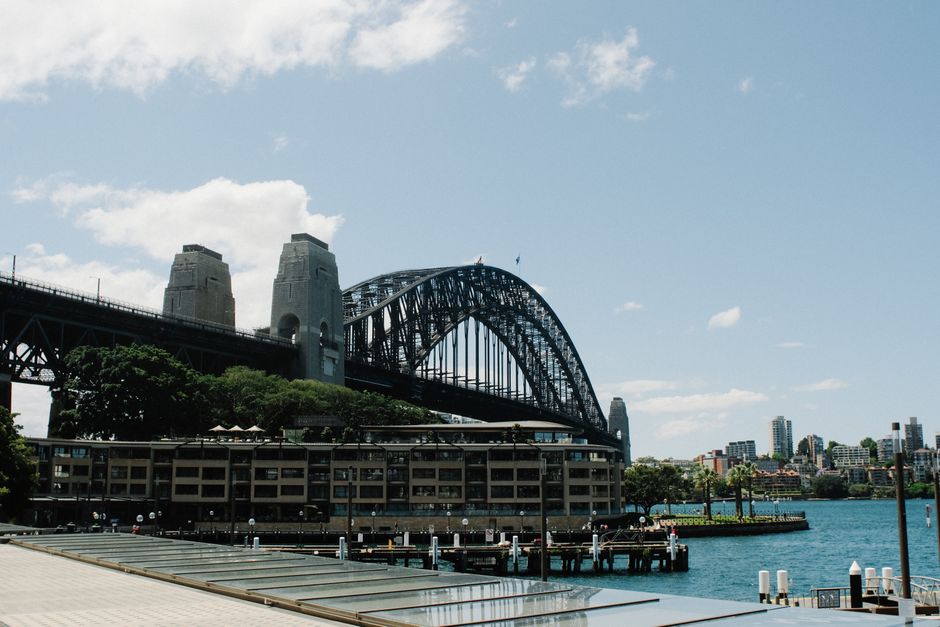
Often, yes. A ferry gives you harbour scale, skyline views and a warm place to sit while reducing the physical demand. In Sydney, a short public ferry ride can replace several exposed kilometres and still show the relationship between the city and its water. In Auckland, a ferry can provide the big-picture view that a long shore route cannot. Treat the ride as the main experience, not merely as a taxi across the harbour.
When is a short loop the better choice?
Choose a 2 to 4 km loop when you have just arrived, slept poorly, travelled with limited mobility or face a poor forecast. Hobart’s Salamanca and Constitution Dock area works well for this format. Wellington’s central waterfront and Oriental Bay can also be shortened without making the outing feel incomplete. A compact route is not a failed version of the long walk. It is a deliberate trade: less distance in exchange for better attention and lower recovery cost.
When should you skip the harbour entirely?
Skip it when wind warnings, thunderstorms, flooding, poor visibility or a major event make the route unsafe or unpleasant. Move inland for a market, gallery, botanical garden or neighborhood café instead. Coastal cities offer more than their postcard edge. A wet day spent forcing a shoreline itinerary rarely creates the memory you wanted.
For May, the strongest choice is simple: select one harbour district, walk until the city starts to feel familiar, and leave enough time to stop before the schedule becomes the problem. The shoreline will still be there tomorrow.