How can you see several parts of Europe by train in two weeks without turning the trip into a daily race between stations, hotels, and landmarks? The answer is to build around a few strong bases, protect empty time, and treat the rail network as a tool rather than the main attraction. This is not legal advice — consult a licensed attorney for legal questions about passports, visas, residency, or border requirements.
How to plan the route before booking trains

Build the itinerary in layers. Lock the trip’s shape first, then decide which trains deserve fixed reservations. This order protects you from paying for a fast connection that later forces you to shorten a stay.
Use this five-step planning sequence
- Choose the arrival and departure airports. Open-jaw flights often save a long return journey. For example, arriving in Paris and departing from Vienna can support a west-to-east route.
- Mark the non-negotiable experience. Pick one major reason for each base, such as a museum district, an alpine landscape, a food region, or a historic center. If a city has no clear role, remove it.
- Draw a one-direction route. Put the bases in geographic order. A simple line creates more options if weather or energy changes your plans.
- Add one flexible day after every long transfer. Do not schedule a timed museum tour or mountain excursion on the same afternoon as a cross-border journey.
- Reserve only the hard-to-replace pieces. Book international high-speed trains, night trains, and tickets for a fixed event first. Keep short regional trips open until you know your energy level.
Use the 70 percent rule
Plan about 70 percent of the trip and leave 30 percent open. In a fourteen-day itinerary, that might mean reserving four intercity journeys, three anchor activities, and the first night in each base while leaving several afternoons unassigned. The open space is not wasted time. It absorbs delays, bad weather, closed museums, and the simple fact that a favorite neighborhood may deserve another walk.
Avoid stacking two major attractions on a transfer day. A morning train, hotel check-in, and evening concert can work in theory, but one delay can ruin all three. The safer pattern is one fixed item per day, plus optional activities nearby.
Write down the cancellation rules for every fixed booking. A cheap ticket with no exchange option may cost more than a flexible fare if your first train runs late. This is especially important when separate tickets create a connection that the railway does not protect.
Should you buy a rail pass or point-to-point tickets?
Choose the payment method after counting actual train days, not after counting countries. A two-week trip through four countries may need only four long journeys. In that case, point-to-point tickets can be simpler. A route with frequent regional travel may reward a pass, but a pass does not remove every reservation fee or guarantee a seat on a busy train.
| Travel pattern | Most practical choice | Specific rule to check | Verdict |
|---|---|---|---|
| Four or five major rail days across several countries | Eurail Global Pass | Flexi options let you choose travel days within a validity period; a travel day runs from midnight to midnight | Best for non-European residents who want route flexibility |
| Four or five major rail days for an eligible European resident | Interrail Global Pass | Residency eligibility applies, and reservations may still be required on selected trains | Best for eligible residents who value open routing |
| Two or three fixed high-speed journeys | Point-to-point tickets | Compare the total fare, exchange rules, and seat reservation terms before buying | Best when dates are firm and the route is short |
| France high-speed segment | TGV INOUI through SNCF Connect | Seat reservations are required in advance; second-class seat preferences are limited compared with first class | Book early when the departure time matters |
| Overnight connection between major cities | ÖBB Nightjet | Choose a day coach, couchette, or sleeper and confirm the separate berth reservation | Useful when one overnight saves a hotel night and a daytime transfer |
What the pass does and does not cover
A Eurail Global Pass or Interrail Global Pass covers eligible rail travel during the selected travel days, but it does not mean every seat is automatically available. High-speed trains, international services, and night trains can require separate reservations. The official 2026 Eurail guide also distinguishes flexi passes from continuous passes, so check the validity window rather than assuming a fourteen-day pass gives unlimited travel on every calendar day.
Pass holders should also check whether a route uses a participating operator, especially when a journey includes private rail companies, buses, ferries, or local transit. A pass may cover only part of a combined journey. The 2026 Eurail pass guide sets out the travel-day and class rules in detail.
Where reservations create the biggest risk
The most common planning error is treating a reservation-required train like a flexible regional service. TGV INOUI requires advance seat booking, and the SNCF Connect TGV INOUI information explains its seat and fare conditions. Night trains also need more than a pass activation because the sleeping place or couchette is a separate part of the booking.
For a first Europe rail trip, my clear recommendation is point-to-point tickets for two or three fixed high-speed legs, and a flexi pass only when you expect four or more meaningful travel days or want the freedom to change the route. Compare the full cost, including reservations, before deciding.
How much empty time should you leave?

A flexible itinerary needs more than one spare afternoon. Protect at least one unplanned block in every three-day stay and one full buffer day during the two weeks. That is the minimum that keeps a delayed train from becoming a lost city.
Is one free day enough?
One free day is enough for a short route with reliable daytime trains, but it is not enough for a route with several borders, mountain weather, or separate tickets. A half-day buffer can absorb a late arrival; a full day can absorb a missed connection without forcing you to cancel a paid tour. Put the full buffer near the middle of the journey, where it can repair either the first half or the second half.
Which activities belong on flexible days?
Use open days for neighborhoods, markets, parks, viewpoint walks, and smaller museums. Keep timed activities such as popular galleries, special exhibitions, and airport transfers on days with fewer moving parts. This produces a better tradeoff: the must-see item stays protected while the rest of the day can respond to weather and energy.
Do not call a day flexible if it contains a six-hour excursion, a restaurant deposit, and a nonrefundable show. Label each day honestly as fixed, partly fixed, or open. That simple distinction makes the route easier to change when a train sells out or a city feels better than expected.
What a practical 14-day route looks like
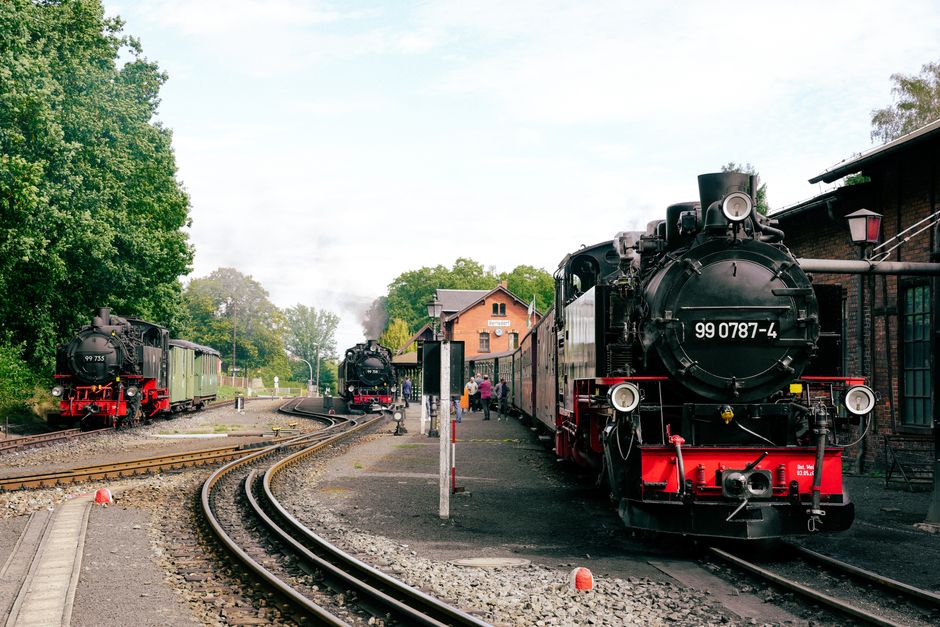
My recommended structure is four bases, three long rail days, and one protected buffer day. It gives a first-time traveler a clear route without making every morning a departure morning.
A balanced west-to-east itinerary
- Days 1–4: Paris. Use the arrival day for a short neighborhood walk. Keep two full sightseeing days and one flexible half-day.
- Days 5–7: Strasbourg. Travel in the morning, then use the base for the old town, canal walks, and one regional day trip if the weather holds.
- Day 8: Buffer day. Keep this day open. It can absorb a late connection, a slow morning, laundry, or an extra night in the city you liked most.
- Days 9–11: Munich. Take the cross-border train after breakfast. Plan one city day, one museum or food day, and one optional excursion.
- Days 12–14: Vienna. Travel in daylight, check in, and leave the final day for a low-risk activity close to the departure point.
Failure modes to remove before departure
- Do not book a nonrefundable evening event on the day of a long international transfer.
- Do not count airport travel as sightseeing time. Arrival and departure logistics can consume half a day.
- Do not carry a large suitcase onto a route with stairs, platform changes, and old-city lodging. One bag that fits overhead or can be rolled with one hand gives you more route options.
- Do not choose a night train only to claim another destination. If you sleep badly, the next day may be less useful than the hotel night you saved.
- Do not pack for every possible climate. Bring a compact rain layer, two pairs of comfortable shoes, and a small laundry plan instead of duplicate outfits.
Travelers who want more scenery can replace Strasbourg with a mountain base, but that change should remove another stop rather than sit on top of the existing route. Travelers who want museums and restaurants can stay all four nights in Paris or Munich and use fewer rail days. The best itinerary is the one that still works after one train delay, one rainy day, and one spontaneous change of mind.
The single most important rule is simple: build a two-week Europe rail itinerary around four bases and protected empty time, then book only the rail segments that truly need fixing.